Richard Pryor and Flip Wilson Turn a Bible Story Into Comedy Gold
THIS SERMON TAKES A VERY UNEXPECTED TURN.

What happens when Richard Pryor and Flip Wilson step into the roles of two completely unforgettable preachers.
You get a comedy performance that takes a familiar biblical story, adds wild imagination, unexpected characters, and a completely different kind of sermon.
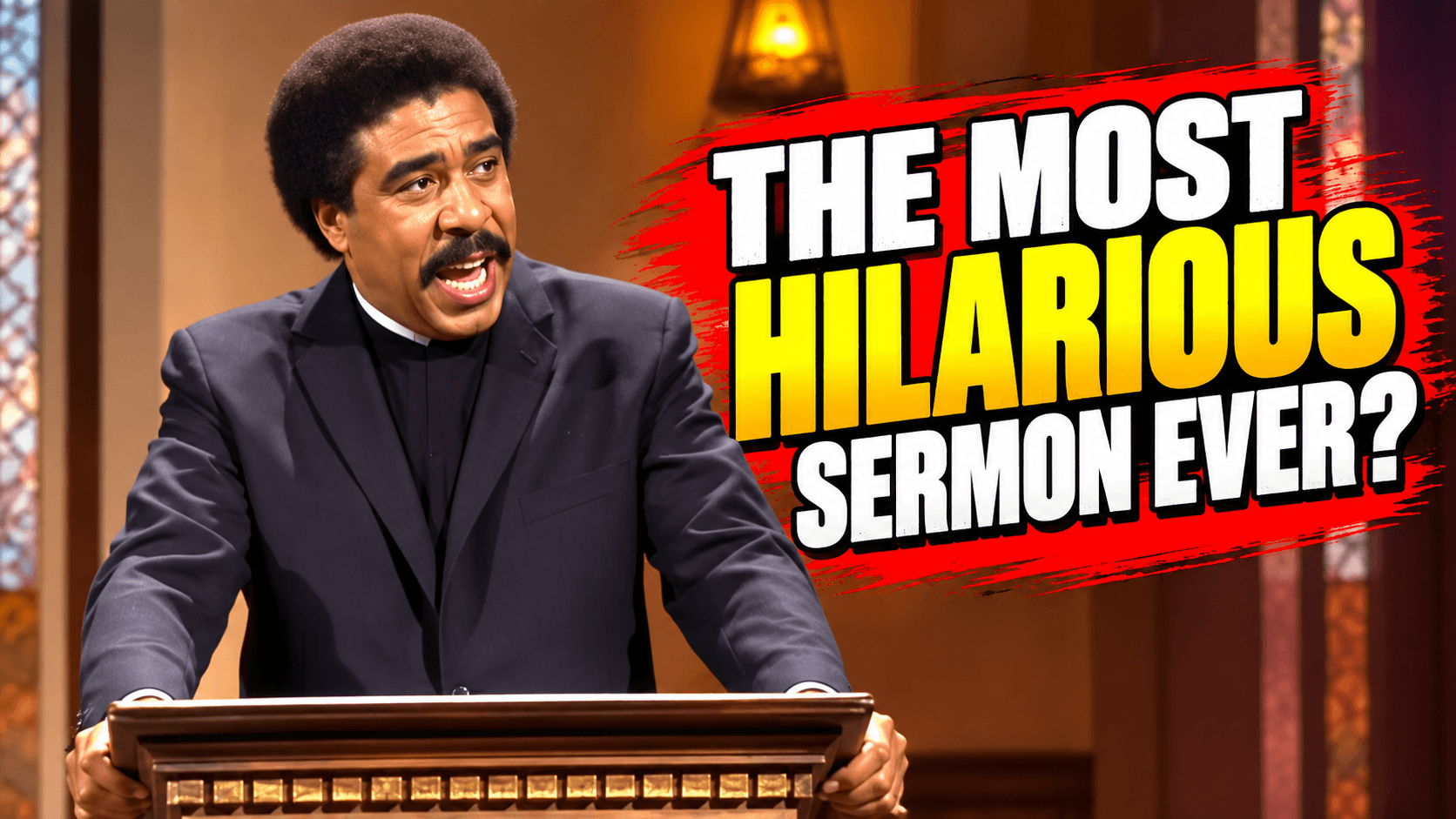
On October 18, 1974, The Flip Wilson Show brought together Richard Pryor and Flip Wilson for a memorable comedy sketch featuring Pryor as Reverend Elmo and Wilson as Reverend Leroy.
The result is a performance filled with exaggerated storytelling, surprising punchlines, and a sermon that becomes more outrageous with every minute.
For fans of classic television comedy, this is the kind of vintage performance that deserves to be watched all the way through.
Richard Pryor Appears as Reverend Elmo
The sketch begins with Richard Pryor playing Reverend Elmo.
He welcomes the congregation to the church's first social gathering of the year on a Friday evening.
Almost immediately, it becomes clear that this is not going to be an ordinary church service.
Reverend Elmo explains that he has been praying for more people to attend the church.
His description of God is already delivered through comedy.
Instead of using traditional religious language, he jokingly compares God to the "Chairman of the Board" while describing himself as a young employee trying to move up in the sales department.
The unusual comparison immediately establishes the tone of the sketch.
Reverend Elmo sounds like a preacher, but Pryor gives the character his own completely unexpected personality.
How Reverend Elmo Met Reverend Leroy
The introduction becomes even more unusual when Reverend Elmo talks about his relationship with Reverend Leroy.
He explains that the two men first met in 1959 in a pool room.
He also shares his own unusual story about meeting God.
According to Elmo, he encountered God while he was in prison after being arrested for stealing a car.
The story combines religious language with an unexpected personal history.
That contrast becomes one of the central comedic ideas of the entire performance.
Reverend Elmo then introduces Reverend Leroy, who comes from the fictional "Church of What's Happening Now."
And that introduction sets up the main portion of the sketch.
Flip Wilson Takes Over the Sermon
When Flip Wilson appears as Reverend Leroy, the energy of the sketch changes immediately.
Leroy begins delivering a sermon aimed at people who are unemployed.
Instead of giving a conventional motivational speech, he turns to the biblical story involving King Nebuchadnezzar and the Jewish young men.
What follows is a wildly comedic retelling.
The familiar biblical setting is transformed into something that feels much closer to a chaotic modern story.
Leroy describes Babylon as a place where partying never seems to stop.
According to his exaggerated version, Babylon is full of entertainment, gambling, and nonstop activity.
The contrast between the biblical setting and the modern-style descriptions creates much of the humor.
King Nebuchadnezzar's Wild Babylon
Leroy's description of Babylon is one of the sketch's biggest comedic setups.
The city is portrayed as a place where the party is essentially happening around the clock.
There are casinos operating through the night and an atmosphere of constant celebration.
The story becomes increasingly exaggerated as Leroy explains what happens when King Nebuchadnezzar moves toward Jerusalem.
His retelling transforms a serious biblical narrative into a fast-moving comedy routine.
The audience is encouraged to recognize the original story while enjoying the completely unexpected way Leroy describes it.
Daniel, Shadrach, Meshach, and Abednego
Leroy continues by describing the four Jewish men involved in the story.
Daniel, Shadrach, Meshach, and Abednego become part of his increasingly outrageous sermon.
The king captures them along with other items that he takes during his conquest.
Leroy even turns the stolen objects into another opportunity for comedy.
He jokes that some of the items could eventually be sold after the church service.
It is this constant shift between serious storytelling and ridiculous commentary that keeps the performance moving.
You think you know where the biblical story is going.
Then Leroy changes the direction with another unexpected joke.
The Fiery Furnace
One of the biggest moments comes when King Nebuchadnezzar orders Shadrach, Meshach, and Abednego to be thrown into a blazing furnace.
Leroy retells the familiar story in his own distinctive style.
The men are placed in the fire, but divine protection keeps them safe.
Leroy presents the moment with a modern comedic attitude, describing the situation almost as though someone has already promised them protection.
The fire eventually loses its power.
The dramatic biblical event becomes another opportunity for Leroy to build the sermon around humor.
The audience already knows the basic story.
But Wilson's delivery makes the retelling feel completely different.
Daniel and the Lions' Den
The sermon then moves to another famous part of the story.
Daniel is thrown into a den filled with lions.
Instead of treating the scene as a terrifying moment, Leroy turns it into another absurd conversation.
Daniel looks at the lions and responds as though there is no immediate danger.
The king decides that Daniel should remain there because the lions supposedly have nowhere else to go.
The joke works because Leroy completely changes the emotional tone of the original story.
A moment that would normally be filled with suspense becomes a casual and ridiculous exchange.
The Writing on the Wall
Then comes one of the most recognizable parts of the story.
During a great feast, a mysterious hand appears and writes a message on the wall.
King Nebuchadnezzar cannot understand what the writing means.
Leroy adds another layer of comedy by giving the king an unexpected explanation for his poor eyesight.
Daniel is called upon to interpret the message.
The moment builds toward the central message of the sermon.
And that message delivers the sketch's biggest thematic punch.
"The Party Is Over"
Daniel interprets the message on the wall for King Nebuchadnezzar.
The meaning is essentially that the celebration has come to an end.
The party is over.
That simple idea becomes the perfect conclusion to Leroy's exaggerated version of the story.
Throughout the sermon, Babylon has been presented as a place of endless partying, gambling, and excess.
The final message suddenly brings all of that to an end.
The joke works because the entire sermon has been building toward that idea.
Reverend Leroy's Unemployment Office
After finishing the biblical story, Reverend Leroy turns his attention back toward the congregation.
His message is directed toward people who do not have jobs.
He tells them about the "unemployment office of God."
The fictional office is open around the clock and offers the opportunity to serve God.
The promised reward is eternal life.
Once again, Leroy combines the language of everyday employment with religious ideas.
The result is another layer of comedy built around the central theme of the sermon.
Richard Pryor and Flip Wilson's Chemistry
The sketch works particularly well because of the contrast between Richard Pryor and Flip Wilson.
Pryor's Reverend Elmo establishes the unusual setting.
Wilson's Reverend Leroy then takes the performance in an increasingly unpredictable direction.
Their characters feel different, yet they fit naturally into the same comedic world.
The interaction allows both performers to build on the energy of the scene.
Rather than relying on a single joke, the sketch continues developing through characters, storytelling, exaggeration, and unexpected turns.
Why This Classic Comedy Sketch Still Stands Out
The appeal of this performance comes from its simplicity.
Two legendary comedians take familiar material and approach it from a completely unexpected angle.
Richard Pryor brings his unmistakable comedic personality to Reverend Elmo.
Flip Wilson transforms Reverend Leroy into a preacher whose sermon constantly surprises the congregation.
The biblical story provides the framework.
The comedians provide the imagination.
The result is a sketch that keeps escalating until the final celebration.
The Ending Brings Everything Together
After Reverend Leroy finishes his sermon, the atmosphere changes again.
The two preachers, the band, and the congregation begin celebrating.
Music fills the scene as the serious appearance of a church service turns into a lively celebration.
It provides a fitting ending to a sketch that has spent the entire performance mixing traditional storytelling with comedy.
The transition from sermon to celebration also gives the audience one final reminder that this was never going to be an ordinary church service.
Watch Richard Pryor and Flip Wilson in Full
Reading about the sketch only captures part of what makes this performance special.
The timing of Richard Pryor and Flip Wilson is something that needs to be seen.
Their facial expressions, delivery, pauses, reactions, and character work create moments that are difficult to reproduce in written form.
KEEP SCROLLING TO WATCH THE FULL CLASSIC PERFORMANCE.
YouTube Video
[YOUTUBE VIDEO EMBED HERE]
Watch the complete performance to see how Reverend Elmo introduces the service, how Reverend Leroy develops his unusual sermon, and how the story eventually leads to the final celebration.
The longer the sermon continues, the more unexpected the retelling becomes.
For fans of Richard Pryor, Flip Wilson, and classic television comedy, this performance offers a memorable look at two legendary comedians working within the same sketch.
A Classic Moment From 1974
The October 18, 1974 appearance on The Flip Wilson Show brings together two performers with very different comedic personalities.
Richard Pryor's Reverend Elmo provides the introduction.
Flip Wilson's Reverend Leroy delivers the main sermon.
Together, they turn a familiar biblical story into an energetic comedy performance filled with unexpected observations and exaggerated storytelling.
The final message is simple.
The party cannot last forever.
Eventually, the party is over.
And in this classic sketch, that idea becomes the perfect ending to one very unusual sermon.
Tell us your favorite moment from Richard Pryor and Flip Wilson's performance in the comments!