Richard Pryor’s Wild Prison Stories: The Dark Comedy That Had Everyone Listening
HE WALKED INTO A PRISON AND CAME OUT WITH A STORY NO ONE EXPECTED.

Richard Pryor had a remarkable ability to turn uncomfortable experiences into comedy.
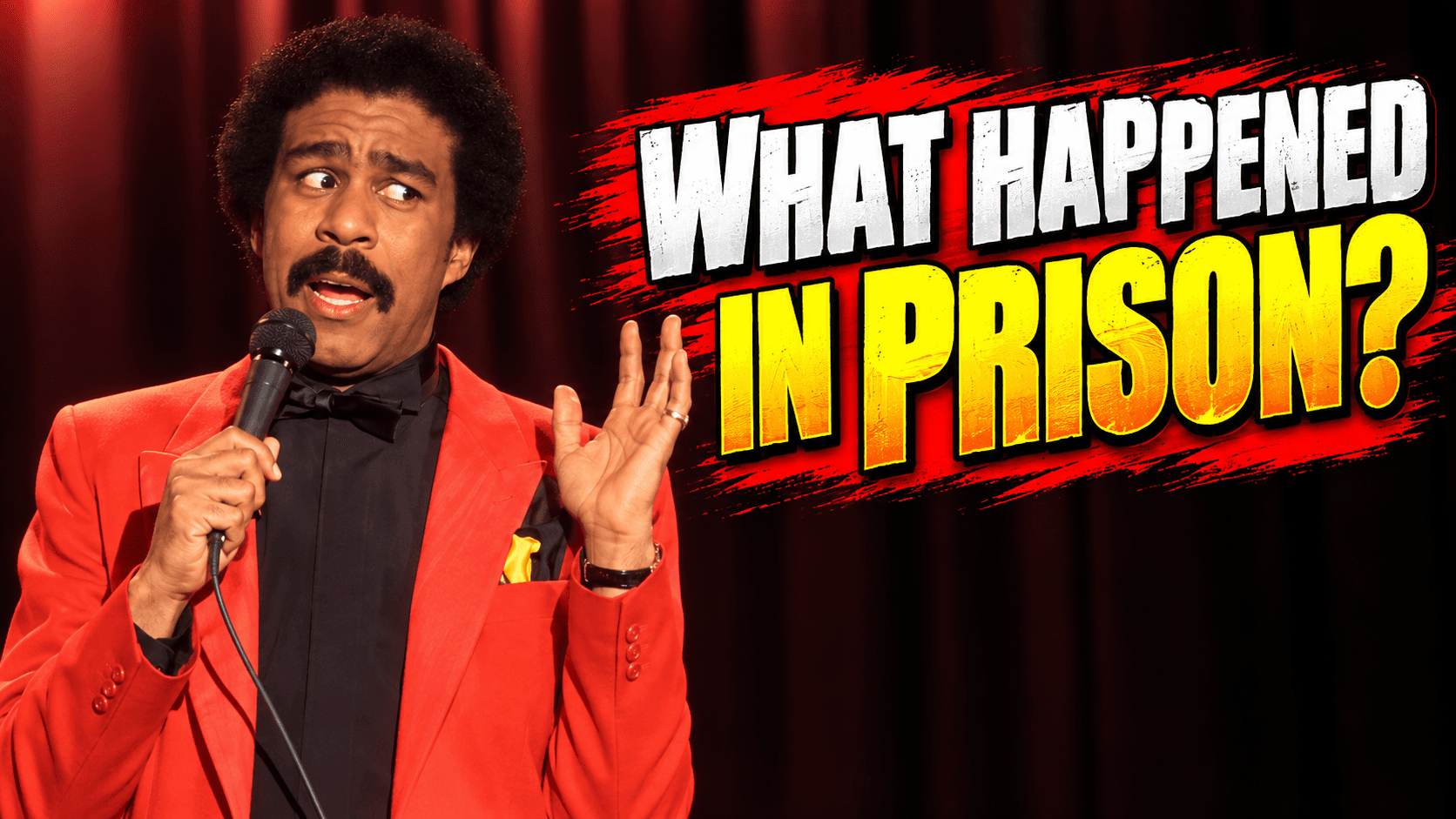
In this stand-up performance, he talks about his experience filming inside the Arizona State Prison.
What begins as a story about making a movie quickly becomes something much bigger.
Pryor describes the prison environment, the people he encountered, the conversations he had with inmates, and the uncomfortable realities he witnessed during his time there.
His storytelling is funny, but it is also sharp, uneasy, and sometimes surprisingly dark.
Rather than simply telling jokes about prison, Pryor uses the experience to explore fear, violence, race, and the strange situations he encountered while surrounded by people serving serious sentences.
And the deeper the story goes, the more unpredictable it becomes.
Richard Pryor Enters the Arizona State Prison
Pryor begins by describing his experience of going to the Arizona State Prison to film a movie.
The environment immediately catches his attention.
Instead of treating the prison simply as a movie location, he focuses on the reality surrounding him.
There were large numbers of inmates, and Pryor found himself confronted with an atmosphere very different from ordinary life.
That contrast becomes an important part of the comedy.
He is not describing a fictional prison created for a movie.
He is talking about being surrounded by actual prisoners while working on a film.
For Pryor, that experience provided plenty of material.
But beneath the humor is a clear sense that the environment made him uncomfortable.
The Prison Population Becomes Part of His Story
One of the subjects Pryor addresses is the racial makeup of the prison population.
He makes a provocative observation about the large number of Black inmates he encountered there compared with the relatively small Black population he associated with Arizona outside the prison.
He also mentions the presence of racist prison groups, including the Ku Klux Klan and Aryan Brotherhood.
The subject is uncomfortable, but Pryor approaches it through his distinctive combination of humor and observation.
His comedy does not make the subject simple.
Instead, he points toward the contradictions he noticed while filming inside the prison.
The result is a story that can make the audience laugh while also making them think about what he is describing.
Talking Directly With Lifers
One of the most striking parts of the performance comes when Pryor describes talking with prisoners serving life sentences.
These were not simply people he saw from a distance.
He interacted with them directly.
That created an unusual situation for the comedian.
Pryor could ask questions, listen to their answers, and try to understand how they viewed their own circumstances.
The conversations became part of his material.
What makes the stories particularly effective is the contrast between Pryor's reaction and the calm way some of the prisoners respond.
The audience is hearing about extremely serious crimes, yet Pryor finds unexpected comedy in the way the conversations unfold.
The Answer That Leaves Pryor Stunned
One of the darkest moments involves Pryor asking a prisoner why he killed everyone in his house.
The response is chillingly casual.
The prisoner essentially explains that he did it because they were there.
That answer becomes one of the most memorable parts of the story.
Pryor's reaction creates the comedy.
The simplicity of the response makes the situation even more disturbing.
There is no elaborate explanation.
There is no complicated justification.
There is simply an unsettlingly direct answer.
Pryor uses that moment to create a story that is both funny and uncomfortable.
It demonstrates how his comedy could find humor in situations where the underlying reality was anything but humorous.
Pryor's Reaction to Dangerous Criminals
Another important part of the routine is Pryor's own reaction to the people around him.
He makes it clear that being around serious criminals affected him.
The stories are not presented as though Pryor believed he was completely fearless.
Instead, his fear becomes part of the comedy.
He is aware that some of the people he is talking to have committed extremely serious crimes.
That realization changes the way he approaches the conversations.
The audience gets to experience the prison through Pryor's perspective.
He is curious enough to ask questions, but aware enough to understand that he is surrounded by people who could be dangerous.
That combination creates much of the tension in the routine.
A Different View of Violence
Pryor also uses the experience to challenge one of his own earlier assumptions.
He jokes about previously thinking that Black people only accidentally caused someone's death.
After encountering people inside the prison, he realizes that some people had deliberately committed violent acts.
The line is delivered as part of Pryor's broader commentary about what he discovered inside the prison.
It is intentionally provocative.
His point is not presented as a simple explanation of crime.
Instead, it becomes part of a larger story about what he saw, what he expected, and what surprised him.
That tension is central to the performance.
Race and the Prison Environment
The discussion of race gives the routine another layer.
Pryor describes seeing a prison environment where racial groups and racist organizations were present alongside one another.
His observations reflect the specific experience he describes from his time filming there.
Rather than giving a formal analysis, he processes the situation through stand-up comedy.
That approach allows him to move quickly between observation, fear, absurdity, and humor.
The audience laughs, but the subject remains uncomfortable.
That combination was part of what made Pryor's storytelling so distinctive.
He could make an audience laugh while forcing them to confront something unpleasant at the same time.
Why the Routine Feels So Different
Many comedy routines are built around fictional situations.
This one is different because Pryor bases the material on an experience he describes as real.
He was actually at the prison.
He actually encountered inmates.
He actually had conversations with people serving serious sentences.
Those circumstances give the jokes a different weight.
When Pryor describes being frightened, the audience understands why.
When he tells an absurd story, the danger surrounding the situation remains in the background.
That makes the comedy feel unpredictable.
You are never completely sure whether the next moment will be funny, disturbing, or somehow both.
Richard Pryor's Storytelling Style
Pryor's strength in this performance is not simply the individual jokes.
It is the way he tells the story.
He builds an environment through small observations.
He describes what he saw.
He explains what he asked.
He shares the answers he received.
Then he reacts to those answers from his own perspective.
That structure makes the audience feel as though they are following Pryor through the experience.
The story develops naturally.
The humor comes from his reactions, his observations, and the strange conversations he describes.
The Dark Humor Behind the Performance
There is an important reason this performance remains memorable.
Pryor does not try to make prison life sound glamorous.
The environment he describes is intimidating.
The people he encounters include prisoners serving life sentences and people who have committed serious crimes.
He openly acknowledges his fear.
But instead of allowing the experience to become only frightening, he transforms it into comedy.
That is the central tension of the routine.
The audience laughs because Pryor finds absurdity in the situation.
At the same time, the subject matter reminds them that the circumstances behind the jokes are serious.
Watch Richard Pryor Tell the Story
The written description can explain what happens in the routine.
But Pryor's delivery is essential to understanding why the material works.
His timing, facial expressions, pauses, and reactions give the story its rhythm.
The uncomfortable moments become more powerful because of the way he builds toward them.
If you enjoy classic stand-up comedy, Richard Pryor's storytelling, or vintage comedy that tackles difficult subjects through humor, this performance is worth watching all the way through.
KEEP SCROLLING TO WATCH THE FULL PERFORMANCE AND HEAR PRYOR TELL THE STORY HIMSELF.
Watch the Full Richard Pryor Performance
[YOUTUBE VIDEO EMBED HERE]
Stay with the video because the power of this routine comes from the delivery.
The prison stories become increasingly intense as Pryor explains what he saw and the conversations he had.
The moments involving the inmates reveal just how unusual his experience was.
His ability to turn fear and discomfort into comedy is what makes the performance stand out.
Why This Richard Pryor Routine Still Gets Attention
Richard Pryor's prison story is more than a collection of jokes about criminals.
It is a personal comedy story built around an unusual filming experience.
Pryor discusses the prison environment.
He talks about race.
He describes conversations with inmates.
He shares disturbing answers.
And he openly reveals his own fear.
That combination gives the routine its distinctive character.
The comedy comes from Pryor's ability to look directly at an uncomfortable situation and find an unexpected angle.
He does not need to make the subject comfortable.
Instead, he makes the audience willing to keep listening.
That is what makes the performance so compelling.
You start with a story about filming a movie.
Then you enter a prison.
Then you meet the people Pryor encountered there.
Then the conversations become stranger.
And before you know it, Pryor has turned an intimidating experience into a memorable piece of stand-up comedy.
Tell us your favorite Richard Pryor moment from this performance in the comments!