Tim Conway’s “The Lunch Break” Is the Slowest Fast-Food Order You’ll Ever See
HE ONLY HAD A FEW MINUTES — THEN TIM CONWAY SHOWED UP.

Imagine having only a few minutes to grab lunch before rushing back to work.
You walk into a restaurant expecting a quick meal.
You place your order.
Then you realize the person behind the counter moves at a speed that makes every second feel like an eternity.
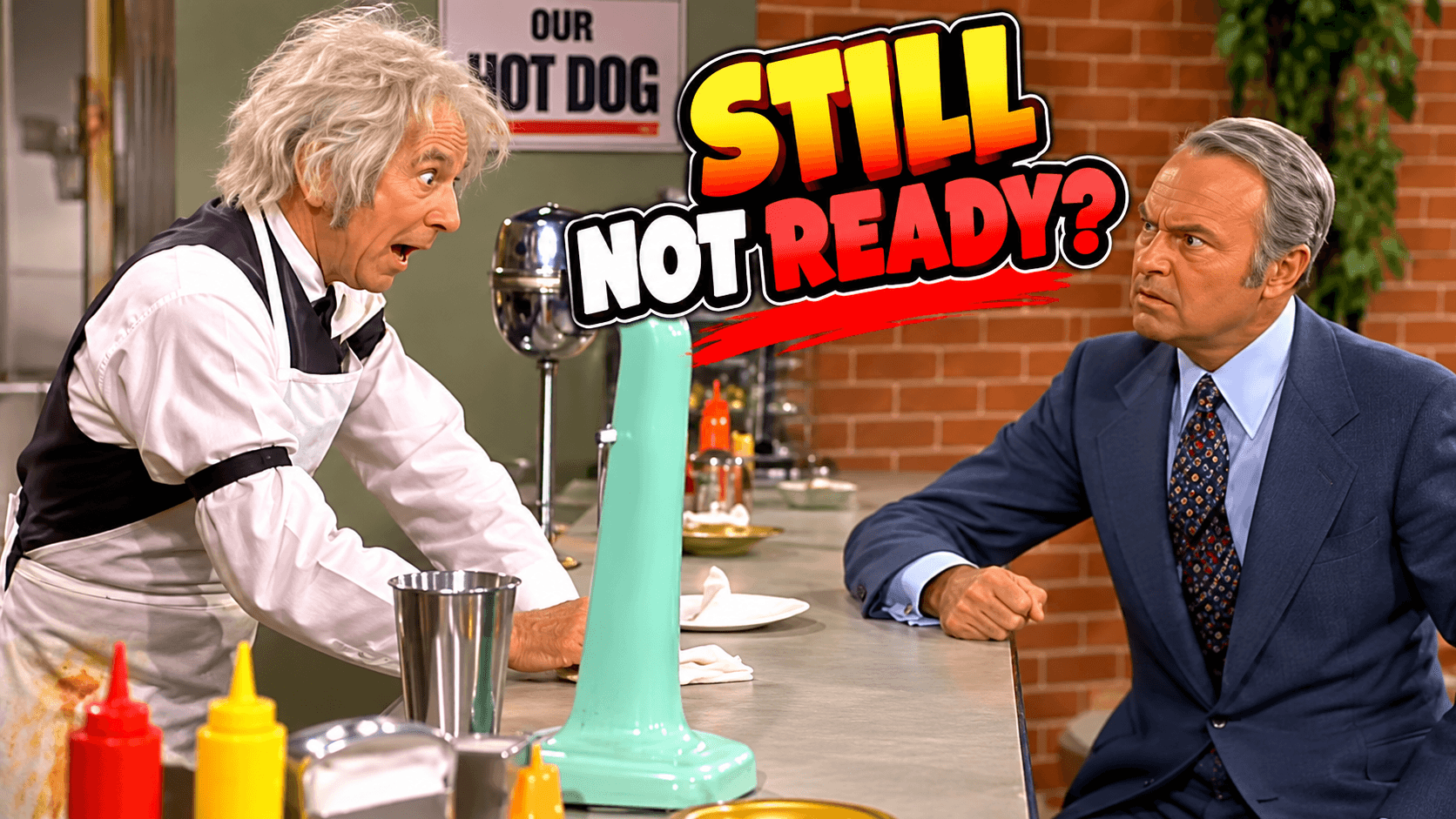
That is the hilarious setup behind “The Lunch Break,” a classic sketch featuring Harvey Korman and Tim Conway from The Carol Burnett Show.
What should be a simple lunch becomes an unforgettable battle between urgency and extreme slowness.
Harvey Korman plays a man desperately trying to make the most of his short lunch break.
Tim Conway plays his familiar Oldest Man character, working behind the counter.
The problem is obvious almost immediately.
Harvey needs everything done quickly.
Tim Conway has absolutely no interest in moving quickly.
And that simple contrast creates nearly all of the comedy.
A Lunch Break That Quickly Goes Wrong
Harvey Korman's character arrives during a short break from work.
He does not have time to sit around.
He needs to order something, eat it, and get back to work.
The situation should be incredibly simple.
Instead, he encounters the slowest restaurant worker imaginable.
Tim Conway's character takes his time with practically everything.
The comedy begins with the enormous difference between the two characters.
Harvey is impatient.
Tim is relaxed.
Harvey watches the clock.
Tim appears to have all the time in the world.
Every second becomes more painful for Harvey as his limited lunch break continues disappearing.
Tim Conway’s Oldest Man Makes Everything Take Forever
Tim Conway's Oldest Man character is the perfect choice for this situation.
His movements are deliberately slow.
His speech is slow.
His reactions are slow.
Even the simplest task becomes an extended performance.
Harvey Korman's character tries to communicate that he is in a hurry.
But nothing seems to make Tim Conway move any faster.
That makes the situation increasingly frustrating.
The audience knows exactly what Harvey is thinking.
He came into the restaurant because he wanted something quick.
Instead, he has found himself trapped in the longest lunch order imaginable.
Ordering Food Becomes a Comedy Routine
One of the funniest aspects of the sketch is how ordinary actions become painfully slow.
Harvey needs to see the menu.
Tim Conway takes his time.
Harvey wants to place his order.
Tim Conway takes his time.
Harvey wants the food prepared.
Tim Conway takes his time again.
Nothing dramatic has to happen.
The humor comes from watching a simple restaurant transaction stretch far beyond what anyone would expect.
Tim Conway understands that the longer he delays each action, the more frustrated Harvey becomes.
That frustration creates the rhythm of the sketch.
Harvey Korman’s Growing Frustration Is Priceless
Harvey Korman's performance is essential because his character provides the perfect reaction to Tim Conway's deliberate slowness.
At first, he is simply in a hurry.
Then he becomes impatient.
Then increasingly frustrated.
The longer the interaction continues, the more difficult it becomes for him to maintain his composure.
Harvey knows that he should be able to order lunch in just a few moments.
But Tim Conway turns every small step into another obstacle.
The contrast between their performances is what makes the sketch so effective.
One performer is constantly trying to speed things up.
The other seems determined to make time stand still.
Even the Smallest Actions Become Hilarious
The genius of the sketch is that Tim Conway does not need an elaborate joke every few seconds.
Instead, the comedy comes from small actions.
Taking the order becomes funny.
Getting the ingredients becomes funny.
Preparing the food becomes funny.
Waiting becomes funny.
Even the pauses become part of the joke.
Tim Conway's slow movements give Harvey Korman more opportunities to react.
Every time Harvey thinks the food is finally coming, another delay appears.
The audience is left waiting along with him.
And that anticipation becomes part of the comedy.
The Clock Is Harvey Korman’s Biggest Enemy
Harvey's character does not simply want lunch.
He has a deadline.
His lunch break is short.
That detail makes every delay matter.
If he had an entire afternoon available, Tim Conway's slow service would not be nearly as funny.
Because Harvey has only a limited amount of time, every unnecessary movement becomes increasingly ridiculous.
The audience can imagine the clock continuing to move while Tim Conway calmly prepares the meal.
Harvey's urgency keeps increasing.
Tim's pace never seems to change.
That creates a perfect comedic conflict.
Tim Conway Knows Exactly How Long to Wait
One of the most entertaining parts of Tim Conway's performance is the timing.
His character does not simply move slowly.
He appears to stretch each moment as far as possible.
A pause that would normally last a second becomes much longer.
A simple movement becomes an event.
A routine task becomes an entire comedy sequence.
That timing gives Harvey Korman plenty of opportunities to react.
It also creates anticipation for the audience.
You begin wondering just how long Tim Conway can keep this going.
And every time you think the scene has reached its limit, he finds another way to slow things down.
The Chemistry Between Tim Conway and Harvey Korman
The sketch works because Tim Conway and Harvey Korman have such different comedic styles within the scene.
Harvey brings energy and impatience.
Tim brings calmness and deliberate slowness.
Neither style would be nearly as funny by itself.
Together, they create a perfect comedic balance.
Harvey's frustration makes Tim's slowness funnier.
Tim's slowness makes Harvey's frustration more extreme.
The two performances continuously feed into one another.
That is why the sketch feels so natural despite the exaggerated situation.
When Harvey Korman Finally Breaks Character
One of the most memorable elements of the performance is the way Tim Conway's deliberate comedy affects Harvey Korman.
The situation becomes so ridiculous that Harvey eventually struggles to maintain a straight face.
He begins laughing during the performance.
This kind of breaking character became one of the most enjoyable elements of the chemistry between Conway and Korman.
The audience is no longer watching only the characters.
They are also watching the performers react to one another.
That makes the scene feel spontaneous.
It feels like anything could happen next.
And that unpredictability is part of what makes classic live sketch comedy so entertaining.
Why “The Lunch Break” Still Works
The premise behind the sketch is extremely simple.
A man needs lunch.
He has very little time.
The restaurant worker is unbelievably slow.
That is essentially the entire setup.
But the execution turns that simple idea into a memorable comedy performance.
The sketch understands an important rule of comedy.
Sometimes one simple joke becomes funnier when you keep pushing it.
Tim Conway keeps pushing the same idea.
He is slow.
Then slower.
Then somehow even slower.
Harvey Korman reacts each time.
The audience waits for the inevitable breaking point.
That gradual escalation gives the sketch its charm.
Tim Conway Turns Slowness Into an Art
Tim Conway was particularly effective at physical comedy because he could make ordinary movements feel completely unexpected.
In this sketch, his slow performance becomes the central joke.
He does not need to run around the stage.
He does not need a complicated costume or elaborate setup.
His timing does the work.
A simple movement becomes funny because of how long it takes.
A normal restaurant interaction becomes ridiculous because Conway refuses to treat it like a normal interaction.
That kind of understated physical comedy is what gives the sketch its memorable quality.
The Audience Knows What Harvey Is Going Through
There is something instantly relatable about being in a hurry while someone else is moving slowly.
Most people understand that frustration.
You have somewhere to be.
You are watching the time.
You just want one simple thing to happen.
But somehow everything takes longer than expected.
“The Lunch Break” exaggerates that familiar experience until it becomes pure comedy.
Harvey Korman represents the person desperately trying to save every second.
Tim Conway represents the person who appears completely unaware that anyone is in a hurry.
That makes the situation easy to understand even without a complicated story.
Watch the Full “The Lunch Break” Sketch
Reading about the sketch gives you the setup.
But the real comedy comes from watching Tim Conway's timing and Harvey Korman's reactions.
Pay attention to how long Conway takes to perform the simplest tasks.
Watch Harvey's expression as his limited lunch break slowly disappears.
And look for the moments when Harvey can no longer keep his composure.
The interaction between the two performers is what makes this classic The Carol Burnett Show sketch so enjoyable.
[YOUTUBE VIDEO EMBED]
The Lunch Break — Harvey Korman and Tim Conway
A Classic Comedy Moment Worth Revisiting
“The Lunch Break” is a perfect example of how two talented performers can turn an ordinary situation into memorable television comedy.
Harvey Korman wants a quick meal.
Tim Conway wants to take his time.
That is all the sketch needs.
From the first order to the painfully slow preparation, every moment builds Harvey's frustration.
Tim Conway's Oldest Man character never seems to understand the urgency.
Harvey Korman's increasingly desperate reactions keep the audience engaged.
Then the natural chemistry between the two performers makes the situation even more entertaining when Harvey begins to break character.
The sketch does not need a complicated plot.
It relies on timing, contrast, physical comedy, and two performers who know exactly how to make each other laugh.
Sometimes the funniest stories are the simplest ones.
A short lunch break.
One extremely slow restaurant worker.
And one customer who desperately needs his food before time runs out.
Keep scrolling to the video and watch Tim Conway and Harvey Korman turn an ordinary lunch break into an unforgettable comedy classic.